Key takeaways
- AI flags patterns that correlate with cheating, but many of those patterns are just normal test-taking.
- A human reviewing each flag is the fix, since context is what tells a real issue from a harmless one.
- Adjustable sensitivity per exam type lets you tighten high-stakes tests and relax low-stakes ones.
The AI Proctoring Dilemma: Balancing Accuracy with Fairness
Are you grappling with the tension between leveraging artificial intelligence for exam security and ensuring fair, accurate assessments for every student? This is a daily challenge for modern assessment companies and educational institutions.
While AI proctoring offers incredible scalability and efficiency, it often carries a heavy burden: false positives. These incorrect flags can erode trust, overwhelm administrative teams, and ultimately undermine the integrity they were meant to protect. This article explores the true cost of false flags and how a Hybrid AI + Human model provides the gold-standard solution.
The True Cost of False Positives: Statistics That Matter
The problem of inaccurate AI flags is widespread. Reports from the proctoring industry indicate that some pure AI detection tools can generate false positives at rates as high as 30% to 50%.
- Operational Strain: Even a modest 4% false positive rate, when applied across millions of scans, translates into a massive volume of incorrect flags that human teams must manually resolve.
- The Human Toll: False accusations cause significant stress, particularly for vulnerable groups. This includes neurodiverse students, non-native speakers, and those with disabilities whose natural behaviors (like fidgeting or eye movement) may be misinterpreted by an algorithm.
- Institutional Reputation: Frequent errors damage student trust and create an administrative "review debt" that can take weeks to clear.
Why Pure AI Proctoring Falls Short
Technical Limitations
Pure AI systems lack contextual understanding. They are programmed to detect patterns but cannot "read the room."
- Environmental Triggers: Poor lighting, a pet entering the frame, or a sudden noise can trigger a flag.
- Natural Human Behavior: A student muttering while problem-solving or looking away to think is often flagged as suspicious by a rigid algorithm.
Ethical Considerations
- Algorithmic Bias: There is a documented risk that AI may inadvertently penalize certain demographic groups due to training data discrepancies.
- Privacy Concerns: Continuous biometric monitoring raises questions about surveillance and data retention, often making students feel their privacy has been invaded.
- The Empathy Gap: An algorithm cannot weigh extenuating circumstances or offer a compassionate assessment in borderline cases.
The Hybrid Solution: AI + Human Proctoring
The most effective strategy to overcome these limitations is to combine AI's scalability with human intelligence.
How the Hybrid Model Works
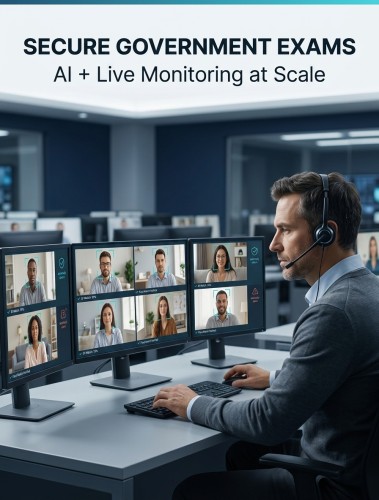
- AI as the First Responder: The AI monitors the session in real-time, identifying potential irregularities at scale.
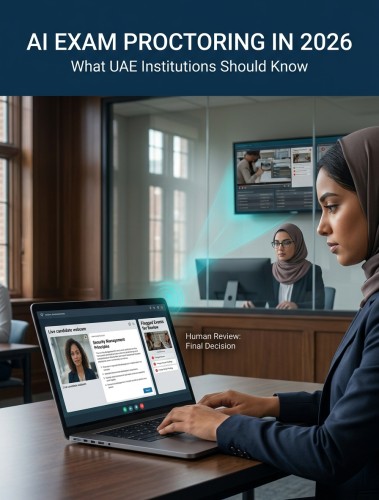
- Human as the Final Judge: Instead of an automatic "fail" or flag, the AI escalates the incident to a trained human proctor.
- Contextual Review: The proctor reviews the footage to determine if the behavior was a genuine breach or a harmless action (like a student stretching).
Proven Results: Advanced hybrid systems consistently achieve false positive rates below 5%, reducing erroneous flags by as much as 40% compared to traditional methods.
Curious how Proctor360 fits your exam program?
See AI, live, multi-cam, and 360° Total View™ proctoring in a quick 30-minute demo.
Practical Implementation for Organizations
Step 1: Establish a Baseline
Analyze your current cheating detection accuracy and false positive rates. Identify where your workflow, from onboarding to incident review, can best integrate a hybrid layer.
Step 2: Technology Integration
Ensure your solution offers robust API integration with your LMS (Canvas, Moodle, etc.). Use Custom Rule Configuration to tailor AI sensitivity to your specific exam policies.
Step 3: Process Optimization
Establish clear escalation protocols. Define exactly when an incident should move from a proctor to an academic integrity committee. Implement Continuous Quality Assurance by auditing a sample of both flagged and cleared sessions.
Global Compliance and Future Trends
| Region | Primary Focus | Key Regulation |
| North America | Student Data Privacy | FERPA |
| Europe | Data Sovereignty | GDPR |
| Middle East/Asia | Scalability & Cultural Context | Local Privacy Laws |
The Path Forward
The automated proctoring market is projected to grow at a CAGR of 18.7% through 2033. Future trends include:
- LLM-Based Contextual Analysis: Using large language models to better "understand" the context of a student's environment.
- Advanced Behavioral Biometrics: Analyzing typing cadence or mouse movements for non-intrusive identity verification.
- Blockchain Integration: Creating immutable exam logs for absolute transparency.
Conclusion
The challenge of AI false positives is a hurdle, but not a dead end. By combining the scalability of AI with the nuanced judgment of human proctors, institutions can protect student well-being while upholding the highest standards of integrity.
Explore how Proctor360’s hybrid solution can transform your assessment integrity today.  Schedule a demo: https://meetings.hubspot.com/calvin-rimes/intro-call-with-proctor360-1
Frequently Asked Questions (FAQs)
Why do AI proctoring systems generate false positive flags?
AI systems flag behavioral patterns statistically correlated with cheating, but these same patterns (head turns, sound events, gaze shifts) occur naturally during legitimate exam-taking, especially for students with disabilities or in noisy home environments.
How does Proctor360 reduce false positives in AI proctoring?
Proctor360's hybrid model routes all AI flags above a configurable threshold to a human proctor for review before any flag is communicated to the candidate or institution, eliminating false positives at the review stage.
How do false positives affect students?
False flags cause significant student anxiety, can delay grade release, and sometimes result in unjust academic misconduct referrals. Proctor360's human review layer ensures students are only flagged when human judgment confirms a genuine concern.
What is Proctor360's false positive reduction rate?
Proctor360 clients using the hybrid monitoring model report a 40% reduction in false positive flags compared to AI-only proctoring platforms, based on post-session review data collected across multiple institution deployments.
Can institutions customize the AI sensitivity threshold?
Yes. Proctor360 administrators can adjust AI detection sensitivity per exam type, applying stricter thresholds for high-stakes certifications and more permissive settings for formative or low-stakes assessments.
Ready to see Proctor360 in action?
Get a 30-minute demo tailored to your exam type, whether that is AI, live, multi-cam, or 360° Total View™.

Kranthi Bathula is the Co-Founder and CTO of Proctor360 and an online proctoring and assessment-security expert with extensive experience in EdTech, exam integrity, and AI-enabled test monitoring. He writes about remote proctoring, test security, AI in assessments, live and automated proctoring, and best practices for secure online testing. Through his engineering-driven insights, Kranthi helps educational institutions, certification bodies, and employers make informed decisions to protect the integrity of their exams.