In today's fast-paced digital world, how do we ensure the fairness and security of online exams without overwhelming candidates or sacrificing integrity? This question is at the heart of modern education and professional certification. As more learning and assessment shifts online, the need for robust and reliable proctoring solutions has grown significantly.
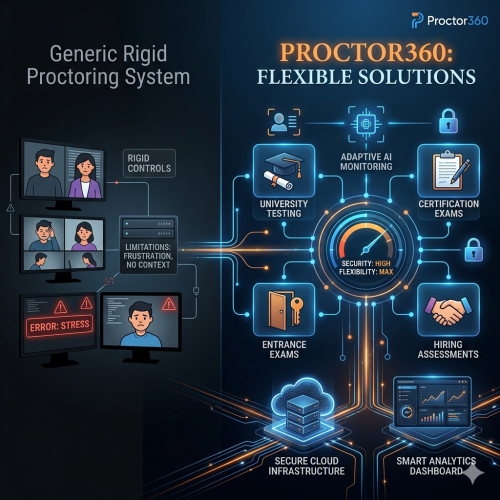
Traditional proctoring methods often struggle with scalability, cost, or the nuanced detection of sophisticated cheating. Fully automated systems, while efficient, can sometimes produce frustrating false positives, impacting the candidate experience. This is where hybrid solutions step in, offering a balanced approach.
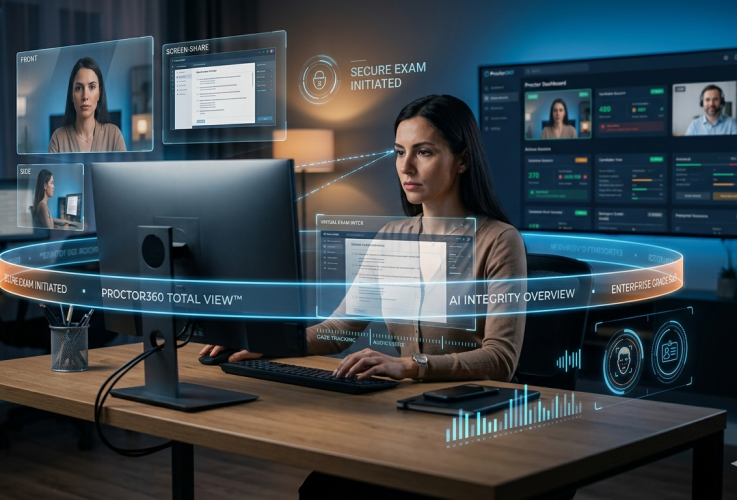
Proctor360 has pioneered a unique approach that merges cutting-edge artificial intelligence with the invaluable judgment of human proctors. This blend creates an environment where exams are not only secure but also fair, scalable, and stress-free for test-takers. It truly offers the best of both worlds, addressing the complex challenges of remote assessment.
What is Hybrid Online Proctoring?
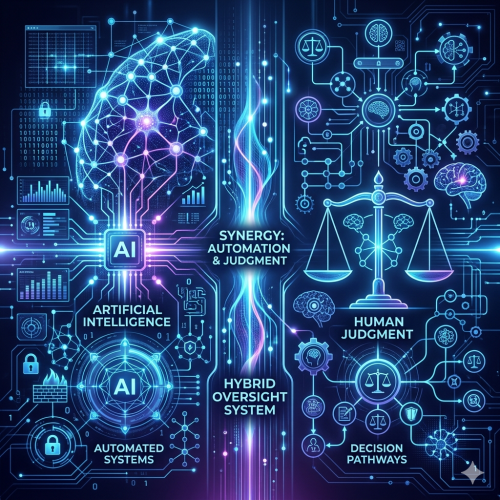
Hybrid online proctoring represents a smart evolution in how we supervise remote exams. It's not just about choosing between human supervision or AI automation; it's about combining their strengths. This blended approach ensures maximum security while minimizing invasiveness and cost.
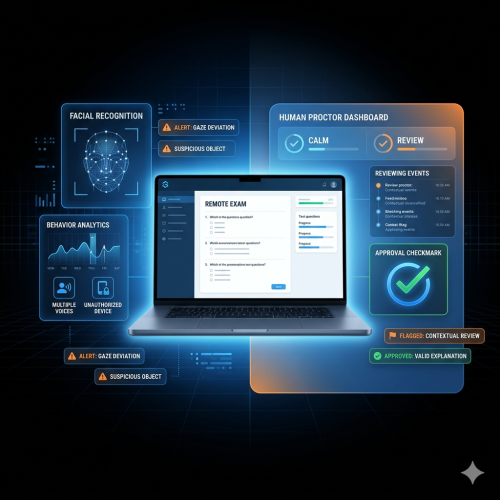
At its core, hybrid proctoring integrates advanced AI technology with human oversight. The AI acts as the first line of defense, efficiently monitoring for suspicious behavior. Human proctors then provide the crucial layer of judgment and intervention when needed, ensuring accuracy and fairness.
The AI Component: Automated Monitoring & Detection
The artificial intelligence in hybrid proctoring is incredibly sophisticated. It constantly monitors various aspects of the exam environment, including:
- Gaze Tracking: Monitoring eye movements for suspicious patterns.
- Object Detection: Identifying unauthorized items like phones or tablets.
- Audio Analysis: Listening for prohibited sounds or unauthorized communication.
- Browser Security: Detecting attempts to access prohibited software or websites.
The Human Element: Expert Oversight & Intervention
While AI is powerful, it lacks the contextual understanding and nuanced judgment of a human. Certified human proctors review the flags raised by the AI, assess the situation, and determine if an actual violation has occurred. This human touch reduces false positives and ensures a more empathetic testing experience.
Why Hybrid Proctoring is Revolutionizing Online Assessment
The shift towards hybrid solutions is a fundamental change in how we approach exam integrity. This method offers compelling benefits that address many of the limitations of older proctoring models.
Solving the Scalability-Security Paradox
One of the biggest challenges in online assessment has been balancing the need for strict security with the ability to scale. Fully live proctoring is expensive and difficult to scale for thousands of students globally. Fully automated AI, while scalable, can miss subtle cheating methods.
Hybrid proctoring solves this paradox. The AI handles the bulk of the monitoring, allowing human proctors to manage multiple sessions effectively by focusing only on flagged incidents.
Reducing False Positives & Improving Accuracy
An AI-only system might flag a student looking away from the screen as suspicious, even if they are just thinking. With hybrid proctoring, a human proctor can quickly review such a flag and dismiss it if it's benign. This ensures that only genuine violations are escalated, saving time and improving the candidate experience.
Proctor360's Hybrid Online Proctoring Framework
Proctor360 has engineered a robust and intuitive hybrid online proctoring framework designed for maximum exam integrity.
AI-Powered Detection Algorithms
Our system uses behavioral analysis to identify patterns that might indicate a student is receiving help. This goes beyond simple face detection to monitor unusual keyboard activity, mouse patterns, and the presence of additional people.
Certified Human Proctor Network
Complementing our AI is a network of highly trained professionals. They are experts in assessment security and are skilled at interpreting AI flags, ensuring every decision is fair and supported by concrete evidence.
Real-Time Intervention Protocols
When the AI flags suspicious activity, a human proctor can immediately review the incident. Intervention can range from a discreet chat warning to pausing or ending the exam session, providing truly live online proctoring when it matters most.
ROI Analysis: The Business Case for Hybrid Proctoring
Adopting Proctor360's hybrid model offers significant financial and operational benefits.
| Feature | Live Proctoring | AI-Only Proctoring | Proctor360 Hybrid |
| Scalability | Low (Limited by staff) | High | High |
| Accuracy | High | Low (False positives) | High |
| Cost | Very High | Low | Moderate (Best Value) |
| User Experience | Stressful | Frustrating | Supportive |
Organizations often see a positive return on investment (ROI) within 6-12 months, primarily through reductions in proctoring labor costs of 40-60% compared to traditional live-only models.
Implementation Guide: Getting Started
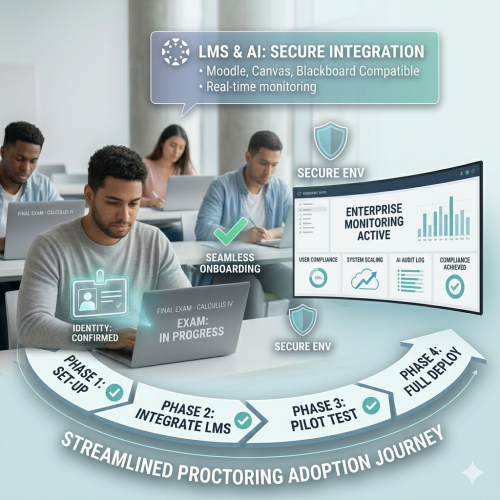
Transitioning to Proctor360 is a straightforward process designed for compatibility and ease of use.
- Technical Requirements: Candidates typically need a computer with a webcam, microphone, and a stable internet connection. No complex software installation is required.
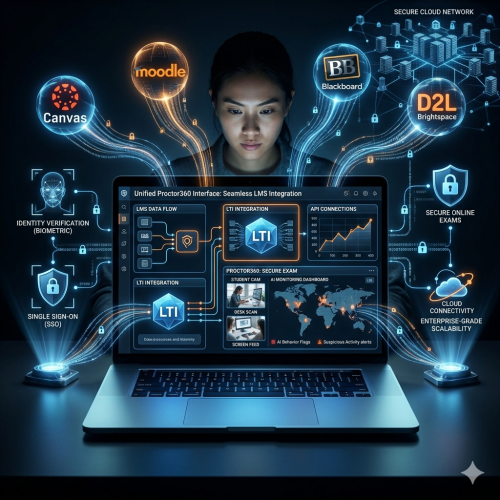
- LMS Integration: Our solution integrates effortlessly with popular platforms like Canvas, Moodle, Blackboard, and D2L Brightspace.
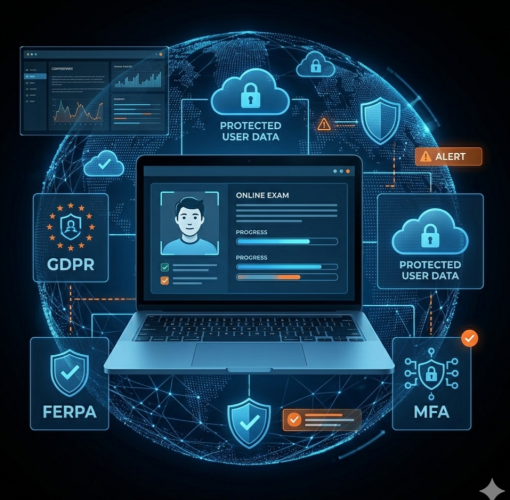
- Regional Compliance: We ensure data handling practices align with FERPA (North America) and GDPR (Europe), offering regional data storage options to meet local standards.
Frequently Asked Questions (FAQs)
Q1: How does hybrid proctoring differ from fully automated AI?
Hybrid proctoring uses AI as a filter, while humans make the final judgment. This ensures that context (like a student stretching or looking at allowed notes) is considered, which AI-only systems often fail to recognize.
Q2: Is this model cost-effective?
Yes. By using AI to do the "heavy lifting" of monitoring, human proctors only spend time on flagged incidents. This allows one proctor to supervise more students simultaneously, cutting costs by up to 60% compared to 1-to-1 live proctoring.
Q3: How do you protect student privacy?
We follow a "privacy by design" approach. Data is collected only for security purposes, encrypted, and stored according to strict regional regulations like GDPR and FERPA. Human proctors only review sensitive video feeds when the AI detects a potential issue.
Q4: Can it handle open-book exams?
Absolutely. Our system allows administrators to customize rule sets. The AI can be configured to ignore specific permitted resources while still watching for unauthorized communication or secondary devices.