The Hybrid Proctoring Revolution: Why AI Needs Human Insight
In the rapidly evolving world of online assessments, maintaining integrity is a constant challenge. Educational institutions and certification bodies worldwide grapple with balancing security with a fair and stress-free candidate experience. With the rise of sophisticated cheating methods, including those leveraging advanced AI, traditional proctoring methods often fall short.
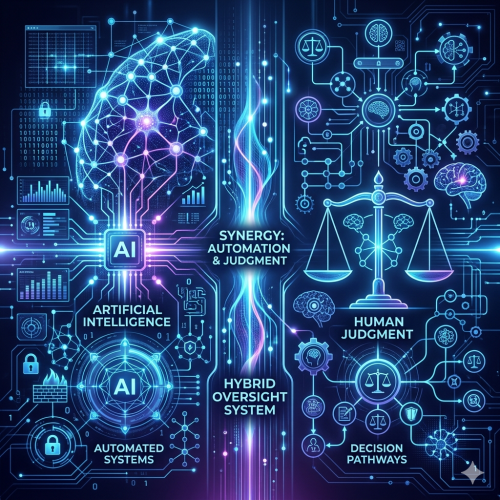
So, how can organizations ensure the credibility of their online exams while also providing a positive and equitable environment for test-takers? The answer lies in a powerful synergy: combining the precision and scalability of artificial intelligence with the irreplaceable nuance and judgment of human insight.
The Limitations of Pure AI Proctoring
While AI offers incredible efficiency, relying solely on automated systems for proctoring presents several notable challenges.
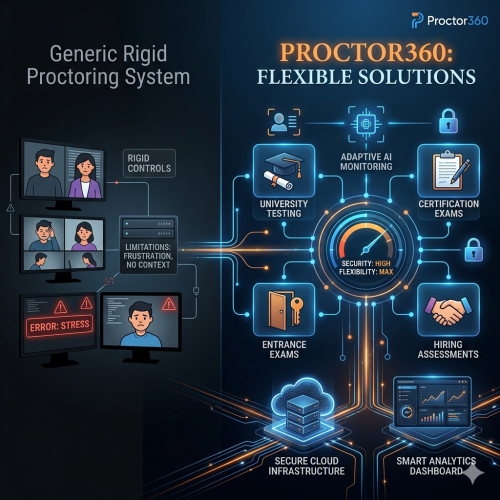
The False Positive Problem
AI algorithms can sometimes misinterpret legitimate behaviors as potential cheating. These "false flags" lead to:
- Candidate Anxiety: Being wrongly accused is deeply discouraging.
- Administrative Burden: Organizations must dedicate resources to manually review and resolve these disputes.
- Lack of Context: An AI might flag a child entering a room as a violation, whereas a human understands the context of a home-testing environment.
The Human Element: Why Oversight Matters
The inclusion of human proctors brings an indispensable layer of intelligence and empathy to online exam monitoring. Humans possess the unique ability to apply judgment in complex scenarios, distinguishing between accidental actions and deliberate misconduct.
Key Human Contributions:
- Accessibility and Inclusivity: Humans can quickly assess and accommodate students with disabilities who may use assistive technologies that AI might flag incorrectly.
- Cultural Sensitivity: Human proctors can interpret actions within their appropriate cultural context, preventing misunderstandings.
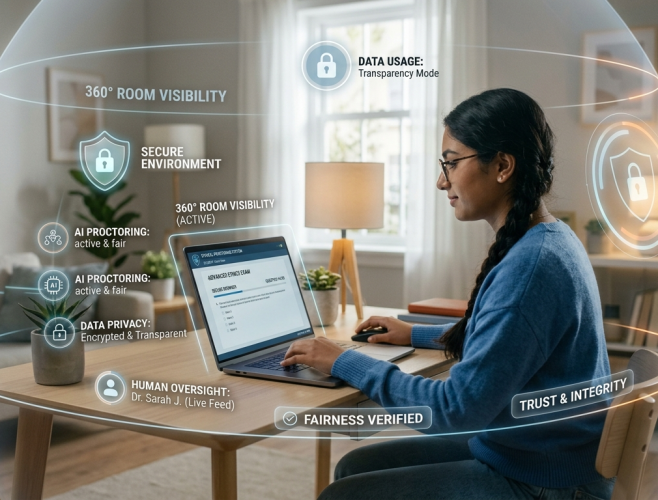
- Trust and Security: Knowing a real person reviews flags provides test-takers with a greater sense of fairness, reducing test anxiety.
The Synergistic Core: Proctor360's Hybrid Blend
Proctor360 has pioneered a sophisticated hybrid approach that leverages the best of both artificial intelligence and human expertise.
1. The Intelligent AI Layer: Real-time Analysis
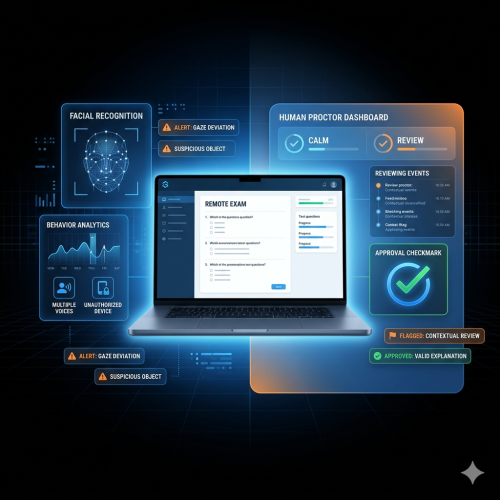
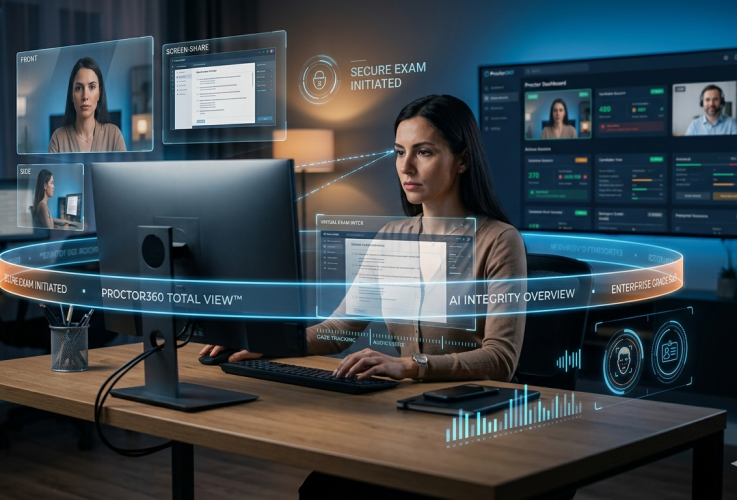
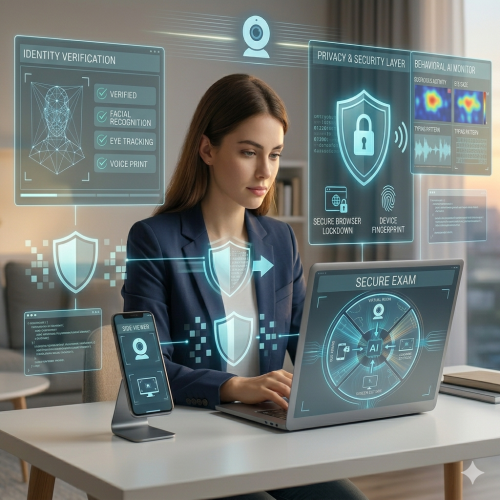
Our AI acts as the first line of defense, performing high-speed monitoring across thousands of test-takers simultaneously.
- Gaze Tracking: Detects sustained glances away from the screen.
- Audio Forensics: Distinguishes between incidental background noise and unauthorized speech.
- Digital Surveillance: Monitors screen activity for forbidden applications or browser tab changes.
2. The Discerning Human Layer: Expert Review
Once the AI flags potential incidents, they are sent to our expert human review system.
- Intelligent Routing: A triage algorithm ensures critical incidents reach proctors immediately.
- Contextual Analysis: Proctors review video and audio evidence to differentiate between innocent movements and genuine cheating.
- Quality Assurance: Our proctors undergo regular calibration sessions to ensure consistent, fair judgment.
Quantifiable Benefits: The ROI of Hybrid Proctoring
The adoption of hybrid proctoring delivers measurable improvements that justify the investment for institutions of all sizes.
| Metric | Improvement with Hybrid Proctoring |
| False Positives | 28% Reduction compared to AI-only systems |
| Monitoring Hours | 40% Reduction in human labor costs |
| Exam Integrity Rate | 99.5% Success Rate in maintaining security |
| Resolution Speed | 30% Faster processing of flagged incidents |
Global Implementation: Regional Considerations
Deploying a global proctoring solution requires an understanding of diverse regulatory requirements. Proctor360’s hybrid approach is designed for this adaptability.
North America (FERPA Compliance)
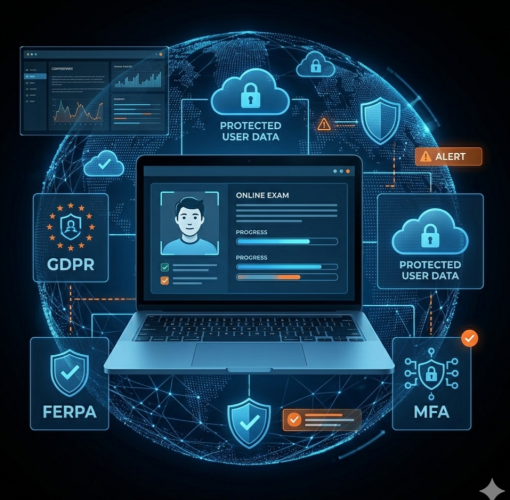
Our system aligns with the Family Educational Rights and Privacy Act (FERPA), ensuring student data is handled securely and confidentially across various state jurisdictions.
Europe (GDPR and Data Sovereignty)
Proctor360 is GDPR compliant, offering data sovereignty options that allow clients to choose data center locations within Europe to meet strict privacy laws.
Asia (Scalability and Language Support)
The AI core manages massive concurrent testing events, while human teams provide linguistic and cultural fluency to interpret incidents accurately across diverse markets.
The Horizon: Future Trends
The field of online proctoring is moving toward even more proactive and transparent models. Proctor360 is currently exploring:
- Predictive Analytics: Using behavioral patterns to identify risks before an exam begins.
- Blockchain Records: Creating unalterable, transparent records of proctored sessions for ultimate auditability.
- Adaptive Proctoring: Environments that adjust monitoring intensity based on the difficulty of the test or historical candidate data.
Conclusion
The hybrid model—expertly blending AI efficiency with human insight—offers the most robust and adaptable solution for modern assessments. Proctor360 stands at the forefront of this revolution, delivering superior integrity and a better experience for all.
Ready to experience the future of secure online exams? Schedule a personalized demo today to see our cutting-edge technology in action and discuss how we can tailor a solution to your specific organizational needs.
Frequently Asked Questions (FAQs)
Q: How does hybrid proctoring handle different cultural norms?
Human reviewers familiar with local contexts can interpret behaviors appropriately, ensuring that cultural differences (such as different styles of thinking or looking away) do not result in unfair penalties.
Q: How long does implementation take?
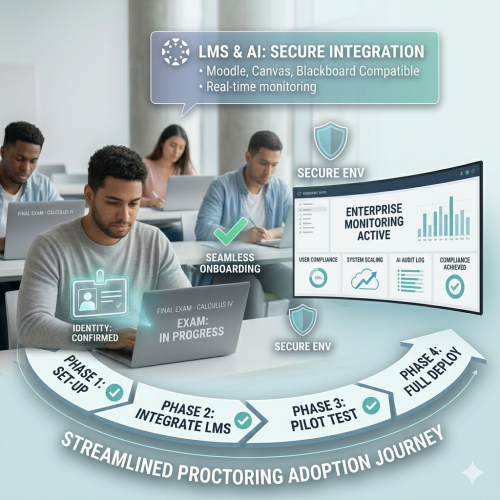
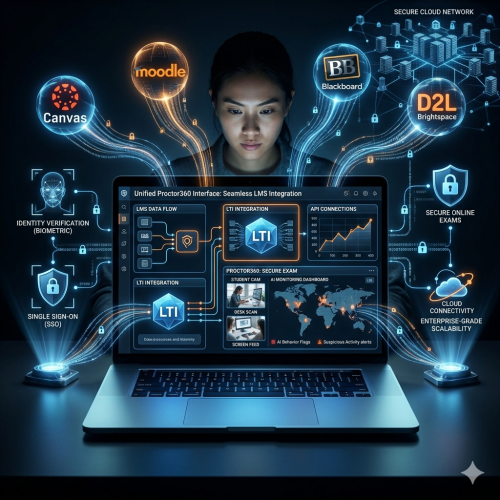
Typically 2-4 weeks. We offer pre-built integrations for major LMS platforms like Canvas, Moodle, and Blackboard to make the transition as smooth as possible.
Q: Is it more expensive than traditional proctoring?
Actually, most organizations save significantly on staffing costs (up to 40%) because the AI filters out the "noise," allowing your human team to focus only on high-priority flags