Empowering Higher Education: The Essential Guide to Modern Online Proctoring
How can universities protect academic standards while expanding the reach of their digital classrooms? As remote learning evolves from a temporary fix to a core educational strategy, the challenge of ensuring fair and secure assessments has taken center stage.
For higher education institutions, the prestige of a degree is tied directly to the integrity of its assessments. To future-proof their programs, universities are turning to sophisticated proctoring software. These tools don't just prevent academic dishonesty; they enable a trustworthy, flexible, and global educational ecosystem.
Defining the Modern Proctoring Landscape
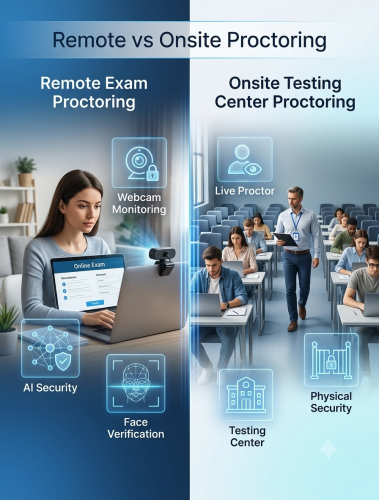
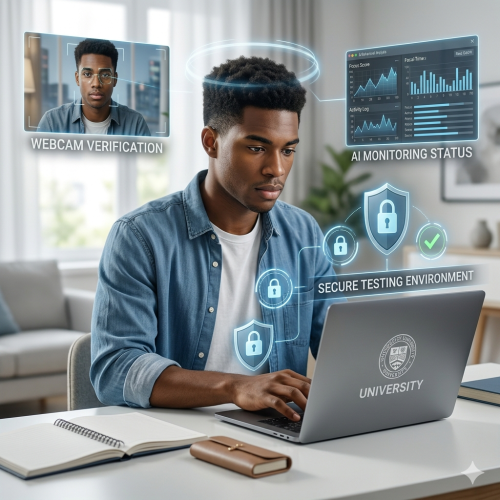
In a university setting, online proctoring is a digital oversight framework used to supervise students during remote exams. By verifying identity and monitoring testing behavior, it replicates the security of a physical lecture hall in a virtual space.
The Three Pillars of Remote Supervision:
- Live Proctoring: A human monitor observes the session in real-time via webcam and audio.
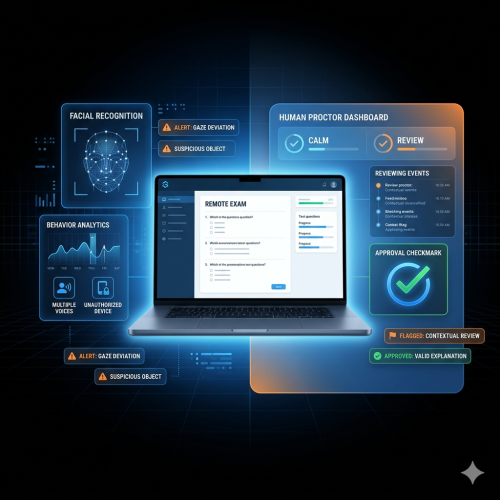
- Automated AI Proctoring: Advanced machine learning algorithms identify and flag suspicious patterns automatically.
- Hybrid Proctoring: A synergy of AI-driven detection and human review, providing high-volume scalability with human nuance.
Institutional Benefits of Advanced Proctoring
The transition to proctored digital assessments offers transformative advantages that extend far beyond simple cheating prevention.
1. Robust Academic Integrity
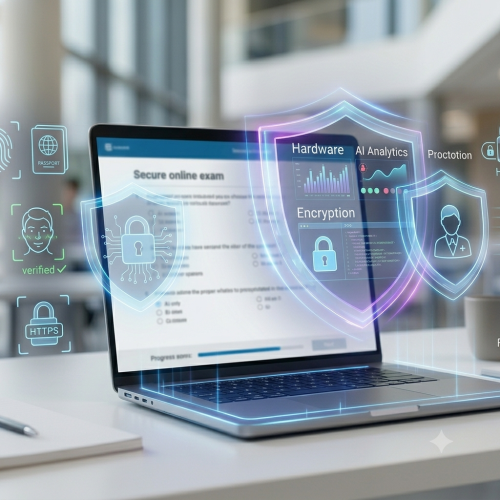
Proctor360 utilizes AI-powered behavioral analysis and Multi-Modal Monitoring (webcam, mic, and screen capture) to create a comprehensive security perimeter. By flagging anomalies like unauthorized devices or unusual eye movements, the system ensures that every credential awarded is earned through merit.
2. Unparalleled Scalability
Physical classrooms have capacity limits; digital ones do not. Online proctoring allows universities to manage thousands of concurrent exam sessions across different time zones. This removes the logistical burden of booking massive venues and hiring large teams of in-person invigilators.
3. Sustainable Financial ROI
While there is an upfront investment, the long-term Return on Investment (ROI) is clear. Institutions save significantly on:
- Real estate and utility costs for physical testing centers.
- Staffing and travel expenses for on-site proctors.
- Administrative overhead associated with paper-based logistics.
4. A Flexible, Student-Centric Experience
Modern students—often balancing work and family—value "anywhere, anytime" testing. Remote proctoring eliminates travel time and parking stress, allowing students to perform in a comfortable, familiar environment that can lead to better assessment outcomes.
5. Actionable Data and Analytics
Proctor360 provides more than security; it provides insights. Faculty can access reporting dashboards to identify cheating patterns, evaluate exam difficulty, and understand student learning gaps through detailed session data.
Integration and Global Compliance
For a university IT department, the "plumbing" of the system is just as important as the features.
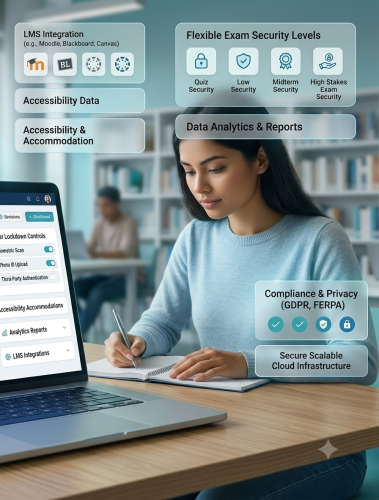
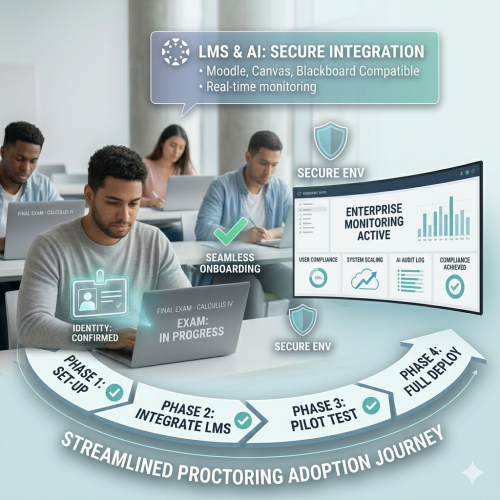
- LMS Compatibility: Leading solutions integrate natively with Canvas, Blackboard, Moodle, and D2L Brightspace. This allows faculty to manage proctoring directly within their existing course workflows.
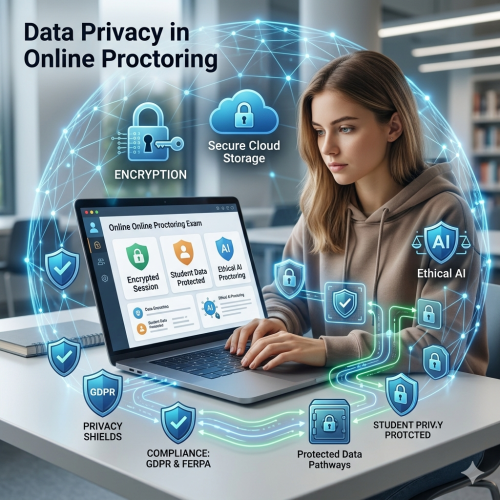
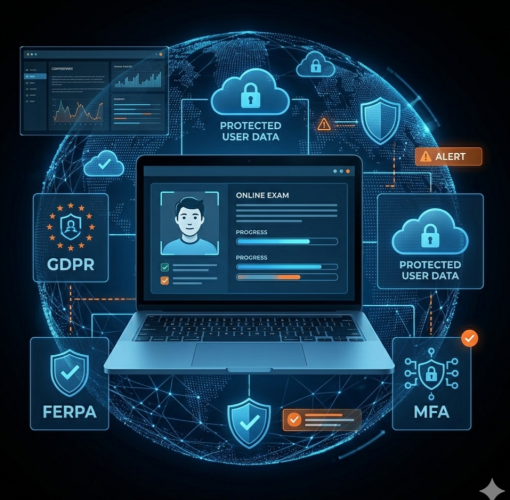
- Data Privacy & Accessibility: Proctor360 is engineered to meet global standards like GDPR and FERPA. Furthermore, we prioritize inclusivity by adhering to ADA and WCAG guidelines, ensuring students with disabilities have the accommodations they need to succeed.
Practical Implementation Strategies
A successful rollout requires a structured approach to change management:
- Technical Foundation: Ensure institutional bandwidth and IT infrastructure can support high-volume video streaming.
- Faculty Empowerment: Conduct workshops to help educators interpret AI flags and configure custom exam rules.
- Student Orientation: Use "Practice Exams" to help students test their hardware (webcams/mics) and clear identity verification (IDV) protocols before the actual test date.
- Phased Deployment: Start with a pilot program in one department to refine the process before an institution-wide launch.
Conclusion: Securing the Future of Higher Ed
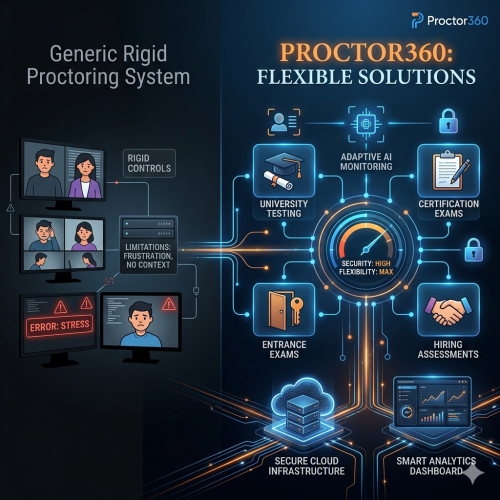
The adoption of online proctoring is a pivotal step in the digital evolution of higher education. By combining 360 Total View™ technology with seamless LMS integration, universities can protect the value of their degrees while offering the flexibility that modern learners demand.
Is your institution ready to enhance academic integrity? Schedule a consultation with Proctor360 to discover how our tailored strategies can modernize your university’s assessment framework.
Frequently Asked Questions (FAQs)
Q: How do we handle "False Positive" AI flags? A: AI flags are not automatic disqualifications. They serve as markers for a human administrator to review, ensuring that a student is never unfairly penalized by an algorithm.
Q: Can this accommodate students with slow internet? A: Yes. Proctor360 is optimized for performance, though we recommend a stable connection of at least 1-2 Mbps for the best experience.
Q: Does the software integrate with our existing Gradebook? A: Absolutely. Our deep LMS integrations allow for automated gradebook synchronization and single sign-on (SSO) capabilities.