Key takeaways
- The common worries about online proctoring are cheating prevention, privacy, fairness, and tech reliability.
- Each has a concrete answer: layered security, data minimization, human review, and pre-exam system checks.
- Addressing them openly, before students ask, is what keeps confidence in the exam high.
The Complete Guide to Addressing Online Proctoring Concerns for Assessment Organizations
Are you grappling with the complexities of ensuring academic integrity in a digital world? As online assessments become the norm, especially for high-stakes exams, the need for robust proctoring solutions grows. However, this technology also brings its own set of challenges, from privacy worries to technical hurdles and ensuring fairness for all test-takers.
For assessment companies, certification bodies, and EdTech institutions, navigating these issues is crucial. It is about more than just catching cheaters; it is about protecting the integrity of your programs, upholding your reputation, and providing a secure yet equitable experience for everyone involved. This guide explores the most common online proctoring concerns and offers practical, actionable strategies to solve them, helping you build a resilient and trusted online assessment environment.
1. Security & Cheating Prevention Challenges
The Cheating Epidemic: Statistics & Realities
Reports indicate a significant rise in confirmed cheating incidents in unproctored settings. For high-stakes testing, such as professional certifications, pre-employment assessments, or entrance exams, the implications are severe. Misconduct devalues credentials, compromises fairness, and undermines institutional credibility. Emerging cheating methods require equally sophisticated countermeasures.
When institutions fail to mitigate online proctoring concerns, they risk losing their accreditation or seeing the market value of their certifications plummet.
Multi-Layered Security Solutions
No single tool provides complete protection. Instead, organizations must integrate complementary strategies:
- Browser Lockdown Implementation: Restricts a test-taker's operating system strictly to the exam environment, blocking access to other applications, secondary monitors, or copy-paste functions.
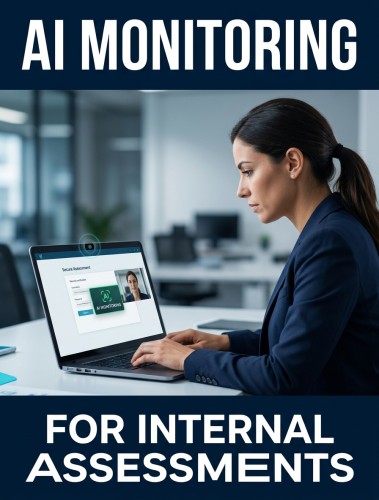
- AI Behavioral Analytics: Algorithmic tools passively monitor behavioral indicators, such as background audio, unexpected face departures, or irregular eye movements, flagging anomalies with precise timestamps.
- Real-Time Monitoring vs. Post-Exam Review: Organizations can deploy automated AI proctoring, live single-camera/multi-camera monitoring, or a record-and-review format. Leading systems utilize a hybrid approach: non-disruptive AI flags anomalies, while certified human proctors audit the footage to confirm true violations and filter out false positives.
For true "Test Center Grade" security, advanced setups leverage hardware solutions like Proctor360’s patented 360 Total View™ headset or secondary smartphone cameras to eliminate room blind spots entirely. By capturing a complete view of the testing environment, Proctor360 technology addresses the core security gaps that fuel widespread remote testing anxieties.
2. Privacy & Compliance Challenges
Collecting desktop, audio, and video telemetry introduces significant regulatory responsibilities. Organizations must address privacy proactively through structural frameworks.
Navigating Global Privacy Regulations
- GDPR Requirements: For European test-takers, platforms must implement explicit consent workflows, strict data minimization, and clear paths for data erasure.
- FERPA Compliance: For US-based educational institutions, student records and testing telemetry must be handled securely to avoid unauthorized third-party disclosure.
- International Frameworks: Platforms must align data pipelines with specific jurisdictional laws across Canada, Australia, Asia, and the Middle East.
Privacy-by-Design Proctoring
To ease user anxiety, privacy must be foundational, not an afterthought.
- Data Minimization: Only record variables necessary to verify integrity. Avoid excessive personal background checks or unnecessary biometric tracking.
- Secure Storage & Retention: Apply end-to-end encryption for data in transit and at rest. Automate data purge schedules to permanently delete session files once the institutional review window closes.
- Transparent Communication: Provide clear, accessible privacy notices outlining exactly what data is collected, why it is needed, and how it is protected.
- SOC 2 Type II Certification: Partnering with vendors like Proctor360 who prioritize audited control frameworks ensures that security and data privacy controls are independently verified.
3. Technical Implementation Concerns
Deploying and managing an online proctoring system at scale demands an infrastructure that remains stable during critical examination windows.
Scaling for High-Volume Testing
- Cloud-Native Architecture: Distributing system loads across elastic cloud microservices prevents single-point bottlenecks during sudden surges in concurrent users.
- Load Balancing & Failover: Traffic routers distribute test-takers evenly across servers. Automatic failover systems seamlessly transition active sessions to backup nodes in the event of an infrastructure failure.
- Bandwidth Optimization: Incorporating content delivery networks (CDNs) and optimized video compression protocols ensures a stable experience for remote or international candidates running low-bandwidth connections.
Integration with Existing Systems
Curious how Proctor360 fits your exam program?
See AI, live, multi-cam, and 360° Total View™ proctoring in a quick 30-minute demo.
- API & LMS Compatibility: Native integration via secure RESTful APIs or LTI standards allows proctoring tools to embed directly within platforms like Canvas, Moodle, Blackboard, and Brightspace. This allows administrators to configure exam parameters and access activity reports without leaving their LMS.
- Single Sign-On (SSO): Streamlines user access and enhances data security by eliminating the need for separate credentials.
Technical Reliability & Support
- Uptime Guarantees (SLAs): Ensure strong service level agreements cover peak, critical testing periods.
- Live Technical Support: Immediate, real-time help desks must be available to assist candidates or administrators with onboarding or connection issues during active testing windows.
- Disaster Recovery: Comprehensive data replication and system restoration plans guard against data center outages or unexpected cyber threats.
4. User Experience & Accessibility
An overly intrusive or technically demanding proctoring system can cause severe test anxiety, which can artificially lower a candidate's actual performance metrics. Balancing security with candidate comfort is vital to solving foundational institutional issues.
Minimizing Test-Taker Friction
- Streamlined Identity Verification: Fast, automated, AI-assisted identity checks process photo IDs quickly and accurately.
- Clear Requirements & Onboarding: Provide concise equipment rules and technical requirements to candidates well in advance of the test date.
- Practice Test Environments: Providing low-stakes, un-graded practice sandboxes allows candidates to verify system compatibility and troubleshoot hardware before exam day.
Addressing Equity & Accessibility
- Disability Accommodations: Platforms must maintain strict alignment with accessibility standards (WCAG), natively permitting screen readers, adjusted interfaces, or approved medical break exceptions without triggering false security flags.
- Low-Bandwidth Modes: Support connection buffers and low-data modes so that users in remote areas are not unfairly locked out due to network speed limitations.
- Cultural Inclusivity: Multilingual onboarding flows and clear, objective instructions minimize misinterpretation across global testing populations.
5. Cost & ROI Considerations
Implementing a comprehensive remote testing framework involves initial planning, but a clear cost-benefit analysis highlights a significant return on investment.
Cost-Benefit Analysis Framework
| Metric | Physical Test Centers | Digital Proctoring Ecosystem |
| Scalability | Linear (Requires more venues, physical proctors, and utilities) | Logarithmic (Cloud-based platforms scale up instantly with low marginal cost) |
| Geographic Reach | Limited to brick-and-mortar locations | Global availability for any candidate with internet access |
| Scheduling Flexibility | Restricted to operating hours and seat capacity | 24/7/365 scheduling options available |
| Security Scope | Limited to line-of-sight on-site proctors | 360-degree environmental capture (via Proctor360 hardware) + AI analytics |
Optimizing Proctoring Investments
- Hybrid Cost Optimization: Maximize efficiency by blending automated AI proctoring for initial background scanning with human oversight to audit flagged anomalies.
- Volume-Based Pricing: Scale down unit costs by selecting flexible tier or per-exam pricing structures that reward high-volume utilization.
6. Implementation Roadmap
A methodical deployment timeline guarantees organizational stability and minimizes technical disruption.
The 4-Phase Deployment Plan
- Phase 1: Requirements Assessment & Vendor Selection: Define specific security baselines, integration needs, compliance parameters, and budget limits. Evaluate specific hardware options like Proctor360's solutions to handle high-stakes certifications.
- Phase 2: Pilot Testing & Validation: Run a controlled pilot with a small focus group to validate local system configurations and establish internal playbooks.
- Phase 3: Full-Scale Implementation: Expand the platform system-wide, establish Single Sign-On, and roll out standardized candidate training documentation.
- Phase 4: Continuous Optimization: Regularly analyze proctoring analytics, refine behavior flags, and update testing protocols to match evolving regulatory landscapes.
Best Practices for Assessment Companies
- Staff Training and Certification: Ensure internal administrators are certified in platform management, flag interpretation, and ethical privacy practices.
- Incident Response Protocols: Establish transparent, standardized steps for handling suspected rule violations, technical disconnections, or candidate appeals.
- Continuous Improvement: Audit testing procedures regularly to stay ahead of digital security vulnerabilities and compliance changes.
Future Trends & Innovations
- Advanced Behavioral Biometrics: Moving beyond basic tracking to evaluate unique typing rhythms or navigation patterns to confirm candidate authenticity throughout the exam session.
- Blockchain for Exam Integrity: Utilizing immutable ledgers to verify audit trails, exam results, and secure credential tracking, making it impossible to tamper with certification histories.
- Predictive Analytics: Evaluating historical risk profiles to help administrators optimize proctoring resources and intercept security threats proactively before the integrity of an exam is broken.
Conclusion
Addressing online proctoring concerns requires an adaptable framework that balances strict anti-cheating technology with a seamless, private user experience. By deploying a multi-layered security approach, building on privacy-by-design principles, and integrating directly into your LMS using robust solutions like Proctor360, your organization can expand its global reach while preserving the long-term value of your credentials.
Frequently Asked Questions (FAQs)
Is online proctoring an invasion of student privacy?
Proctor360 collects only the minimum data required for exam integrity, video, audio, and screen activity during the session. All collection is disclosed in a candidate consent notice before the exam, and data is never sold or used for advertising.
Does online proctoring unfairly flag students with disabilities?
Proctor360 supports accommodation configurations that prevent disability-related behaviors from triggering AI flags, and all flags are reviewed by a human proctor before being communicated to the institution.
What if a student has poor internet and technical problems during an exam?
Proctor360's pre-exam system check identifies connectivity issues before the session begins. During the exam, proctors are notified immediately of any disconnection, and candidates can reconnect within a configurable grace period without penalty.
Are online proctoring results fair compared to in-person exams?
Proctor360's hybrid AI + human review model is designed to match the fairness of in-person proctoring while reducing the variability of human-only monitoring. Incident determination is always a human decision, not an automated outcome.
What happens if a student is falsely flagged for cheating?
Candidates can dispute flags through their institution's academic integrity process. Proctor360 provides complete session recordings, AI log data, and proctor notes to support fair review of any disputed incident.
Ready to see Proctor360 in action?
Get a 30-minute demo tailored to your exam type, whether that is AI, live, multi-cam, or 360° Total View™.

Kranthi Bathula is the Co-Founder and CTO of Proctor360 and an online proctoring and assessment-security expert with extensive experience in EdTech, exam integrity, and AI-enabled test monitoring. He writes about remote proctoring, test security, AI in assessments, live and automated proctoring, and best practices for secure online testing. Through his engineering-driven insights, Kranthi helps educational institutions, certification bodies, and employers make informed decisions to protect the integrity of their exams.