Remote Proctoring for Campus Placements: Secure and Fair Online Hiring Tests
Placement season is a high-pressure window for everyone involved. Companies run online aptitude tests and coding assessments to screen hundreds of students at once, students compete for a finite number of offers, and the placement cell sits in the middle trying to keep the process credible. When those tests run online without proper proctoring, the credibility is the first thing to crack.
The risk is specific. A student who plays an unproctored placement test takes a slot that a genuinely qualified peer earns. The company hires someone whose score does not reflect their ability. And the placement cell's reputation, which is its currency with recruiters, takes the hit. Remote proctoring is what keeps campus hiring tests both secure and fair.
This article covers how proctoring protects placement assessments, and what colleges and recruiters should look for.
Why Placement Tests Are Uniquely Exposed to Cheating
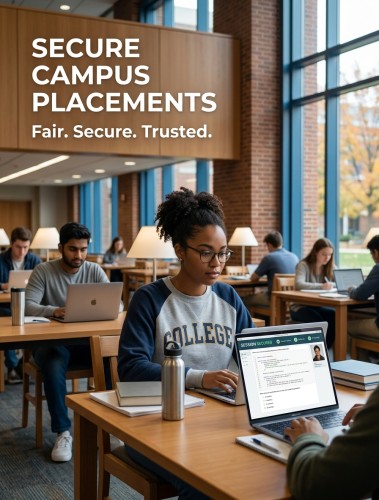
Campus placement tests combine three conditions that invite cheating. They are high-stakes, because a job offer is on the line. They are often run at scale, with an entire batch testing in the same window. And they frequently happen on students' own devices, away from any controlled environment.
The temptation is real and the data backs it up. CodeSignal found that cheating on technical assessments doubled in a single year, from 16 percent to 35 percent, much of it driven by candidates turning to generative AI tools mid-test. For a coding placement test specifically, an unproctored environment is an open invitation to paste a problem into an AI assistant and copy back the solution. Without monitoring, the score measures nothing.
Protecting Fairness for the Students Who Play Straight
It is easy to frame proctoring as catching cheaters. The more important framing is protecting the honest majority. A student who prepared, who knows the material, and who sits the test fairly deserves a process where their score is not undercut by someone gaming the system from the next dorm room over.
Fairness cuts both ways, though. Proctoring also has to avoid penalizing students for circumstances outside their control, like a brief connection drop or an unfamiliar interface. The right setup distinguishes genuine integrity issues from technical hiccups, and gives students a clear path to prepare. A mandatory practice run before the real test levels the field between the tech-savvy and everyone else.
Identity Verification Stops the Most Common Placement Fraud
The signature placement-test fraud is impersonation. A stronger student, or a paid proxy, sits the test in place of the registered candidate. At placement scale, where the cell cannot personally verify hundreds of test-takers, automated identity checks are the only practical defense.
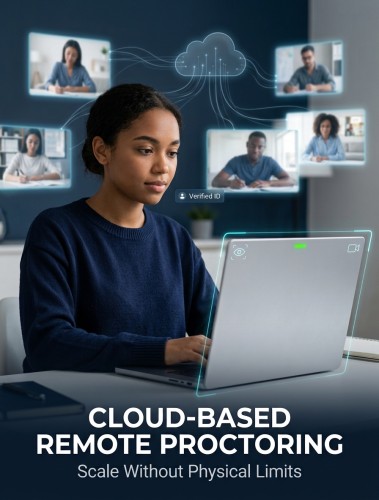
Effective proctoring captures the candidate's ID at check-in, confirms face presence against the person on camera, and keeps monitoring through the session so the verified student is the one who finishes. This single control eliminates the most damaging form of placement cheating, the kind where the score belongs to someone who is not even the candidate. For tests where the stakes justify it, adding live or wider-camera monitoring catches the subtler attempts.
Matching the Proctoring Level to the Test Type
A placement process usually has more than one kind of test, and they do not all need the same monitoring. An early-round aptitude screen filtering a large batch can run efficiently with automated AI proctoring. A final-round technical or coding assessment, where the offer is close and the incentive to cheat is highest, justifies stronger monitoring.
Proctor360 supports this range on one platform. Non-disruptive AI auto-proctoring handles the high-volume early rounds without slowing students down, while live and multi-camera options cover the rounds that decide offers. The placement cell configures each round for the security it actually needs, instead of forcing every test through one mode. For the highest-stakes assessments, 360° Total View™ captures the full environment a single webcam misses.
Keeping Recruiters Confident in Your Results
A placement cell's relationship with recruiters rests on trust in the scores. If a company suspects that placement test results do not reflect real ability, it discounts the college's process and leans harder on its own screening, which weakens the cell's value to students.
Proctored assessments protect that relationship. When a recruiter knows the placement test was monitored, identity-verified, and defensible, the score carries weight. The college's results become something companies act on rather than second-guess. That credibility, built test by test, is what keeps recruiters coming back to campus. The platform behind it should bring SOC2, GDPR, and FERPA compliance and support that responds fast when a student hits a problem mid-test, since a flooded support line during placement week damages confidence as much as a cheating scandal.
The Volume Problem Unique to Placement Season
Placement testing concentrates enormous volume into a narrow calendar window, which creates an operational problem that ordinary academic exams do not. An entire batch may test for a single company on the same day, and several companies may run assessments in the same week. The placement cell is effectively running a high-volume testing operation on top of its normal coordination work, often with limited staff.
This is where the choice of proctoring mode becomes an operational decision, not just a security one. Non-disruptive automated proctoring lets a large batch test simultaneously without a human proctor per candidate, which is the only practical way to handle the volume that placement weeks generate. Reserving live or multi-camera proctoring for the final, offer-deciding rounds keeps the rigor where it matters most while keeping the high-volume early rounds manageable. A cell that matches its proctoring approach to the volume curve of placement season runs a calmer, more credible process.
Coordinating Between the Placement Cell, Students, and Recruiters
A campus placement test has three stakeholders with different needs, and a proctoring rollout that ignores any of them creates friction. The placement cell needs a process it can run at scale. Students need a fair test they can prepare for. Recruiters need results they can trust. Aligning all three is as much a communication job as a technology one.
The cell sits at the center and has to set expectations on every side. Students need the rules, the practice session, and the support path well before test day. Recruiters need to understand what monitoring was applied so they can weigh the scores with confidence. The cell needs a platform that makes its own job manageable, with configuration it can control and support it can rely on during a busy placement window. When all three stakeholders know what to expect, the process runs cleanly and the results carry weight on every side.
Preparing Students So Proctoring Does Not Become a Barrier
Placement season is already high-stress, and an unfamiliar proctoring process can tip a prepared student into a panic that hurts their performance. The point of proctoring is to measure ability fairly, not to add a technical obstacle that penalizes students who have never used the platform before.
Preparation closes that gap. A mandatory practice exam, clear environment requirements, and a real troubleshooting path give every student the same footing, regardless of how comfortable they are with technology. This matters for fairness, because a student who loses marks to confusion about the interface has not been measured on the skill the test is supposed to assess. The placement cell that invests in candidate preparation gets cleaner results and fewer disputes, and protects the honest students the whole process is meant to serve.
Frequently Asked Questions
Why do campus placement tests need remote proctoring?
Placement tests are high-stakes, run at scale, and often happen on students' own devices, which makes them easy to cheat without monitoring. Proctoring verifies identity, monitors the session, and keeps results credible so offers go to genuinely qualified students and recruiters trust the scores.
How does proctoring stop impersonation in placement tests?
It captures the candidate's ID at check-in, confirms face presence against the person on camera, and continues monitoring through the test so the verified student is the one who finishes. This eliminates the most damaging placement fraud, where a proxy sits the test in the candidate's place.
Can remote proctoring catch AI-assisted cheating on coding tests?
Proctoring that records the screen, camera, and audio and flags anomalies makes AI-assisted cheating far harder, because switching to an AI tool or external resource becomes visible. Given that cheating on technical assessments doubled to 35 percent in a year, this monitoring is increasingly essential for coding placement tests.
Does proctoring slow down high-volume placement testing?
It does not have to. Non-disruptive AI auto-proctoring monitors large early-round batches without interrupting students, reserving live or multi-camera proctoring for the higher-stakes final rounds. Matching the proctoring level to each round keeps high-volume screening efficient.
How does proctoring protect a placement cell's reputation with recruiters?
When recruiters know placement tests were monitored, identity-verified, and defensible, the scores carry weight and companies act on them rather than running redundant screening. That trust, built test by test, is what keeps recruiters engaged with the campus.
Secure Your Placement Season
If your placement cell is running online hiring tests and wants every result to be fair, defensible, and trusted by recruiters, talk to the Proctor360 team or book a demo to see how the platform secures campus placement assessments at scale.

Kranthi Bathula is the Co-Founder and CTO of Proctor360 and an online proctoring and assessment-security expert with extensive experience in EdTech, exam integrity, and AI-enabled test monitoring. He writes about remote proctoring, test security, AI in assessments, live and automated proctoring, and best practices for secure online testing. Through his engineering-driven insights, Kranthi helps educational institutions, certification bodies, and employers make informed decisions to protect the integrity of their exams.