Key takeaways
- A smooth exam experience rests on solid basics: a tested device, a stable connection, and clear instructions.
- Small touches, like a practice run and responsive support during the session, prevent most panic moments.
- When the tech fades into the background, students can focus on the exam instead of the setup.
In today's fast-paced digital learning environment, online exams have become an indispensable tool for assessment. However, merely conducting an exam online isn't enough. The true challenge lies in creating an environment where students can focus entirely on demonstrating their knowledge, free from technical glitches, intrusive security measures, or confusing interfaces. A truly smooth online exam experience can significantly impact student performance, reduce anxiety, and uphold the integrity of the assessment process.
The stakes are high. Technical failures lead to widespread frustration, re-takes, and damage to institutional reputations. Conversely, a well-executed online exam enhances student confidence and validates their academic efforts. This guide explores practical strategies and essential considerations for achieving a seamless, effective, and positive online examination for every student.
The Pillars of a Truly Smooth Online Exam Experience
Achieving excellence in online assessments requires a multifaceted approach, focusing on several key areas that collectively contribute to a student's perception of a smooth online exam experience. These pillars form the foundation of any successful online examination strategy, ensuring that every element works in harmony.
- Technical Reliability: This covers platform uptime, server load capacity, and connection stability so systems do not fail during critical moments.
- Security Without Intrusion: This balances the need for academic integrity with respecting student comfort and privacy through non-disruptive monitoring.
- User-Centric Design: Intuitive interfaces and clear instructions guide students effortlessly, minimizing unnecessary cognitive load.
- Global Scalability and Accessibility: Systems must support diverse learners across different geographies and varying physiological needs.
- Actionable Analytics: This allows institutions to learn from data patterns, continuously improving the process for future assessments.
Building a Robust Foundation: Technical Strategies
The backbone of any successful online assessment is its technical infrastructure. For students to enjoy a smooth online exam experience, the underlying technology must be flawless, reliable, and capable of handling diverse demands. Technical glitches derail student focus, cause immense stress, and compromise the validity of results. Prioritizing technical robustness is non-negotiable.
Optimizing Server Infrastructure for Global Delivery
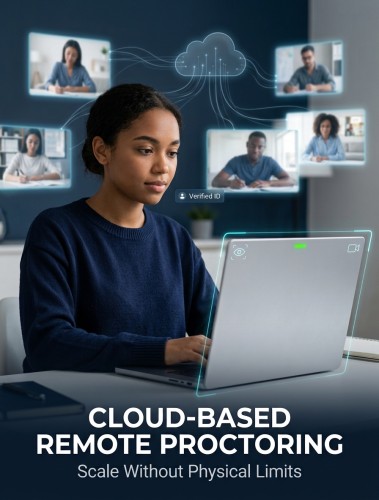
Reliable servers are the bedrock of online assessments. To ensure uninterrupted access and fast loading times for a global student base, cloud-based solutions with Content Delivery Networks (CDNs) are essential. Distributing servers across various geographical regions means that students connect to a node closer to them, dramatically reducing latency. Furthermore, the server architecture must feature high availability and redundancy. Implementing a zero-downtime platform approach ensures that if one server experiences an issue, another seamlessly takes over without students noticing a disruption.
Ensuring Network Stability and Bandwidth Optimization
While institutions cannot control a student's home internet, they can optimize their platform to be as bandwidth-efficient as possible. This includes compressing multimedia content, using efficient streaming protocols, and minimizing background processes. Implementing bandwidth-optimized assessments helps students with less robust internet connections. Providing clear guidelines on minimum internet speed requirements before the test day is also vital. In cases where internet stability is a known issue, offering tools for lag-free online testing should always be a priority in platform development.
Device and Browser Compatibility
Students use a wide array of hardware, from laptops and desktops to tablets and smartphones. An online exam platform must offer comprehensive cross-device compatibility to prevent accessibility barriers. Regular testing across various browsers like Chrome, Firefox, Edge, and Safari is crucial. Providing a list of supported browsers helps students prepare, while mobile exam compatibility ensures that portable device users experience an accessible digital assessment.
Pre-Exam System Checks and Diagnostics
Integrating a pre-exam system check into the platform allows students to test their equipment, internet connection, and browser settings before the actual exam. This diagnostic tool identifies potential issues like blocked pop-ups or insufficient webcam permissions, allowing students to resolve them in advance. Accompanying this with clear troubleshooting guides empowers students to resolve minor technical issues independently, reducing support requests during exam time.
Securing Integrity While Prioritizing Comfort
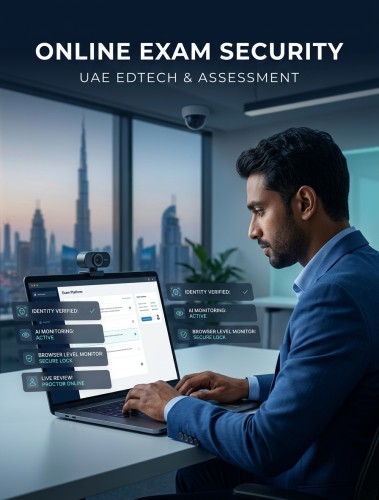
Maintaining academic integrity is a cornerstone of any assessment. However, in the digital realm, concerns about malpractice often lead to overly stringent security measures. The key challenge is to achieve robust security without making students feel under intense scrutiny. Utilizing the Proctor360 platform provides a secure assessment delivery system that doesn't add to student anxiety.
Advanced Proctoring Solutions: AI vs. Human Monitoring
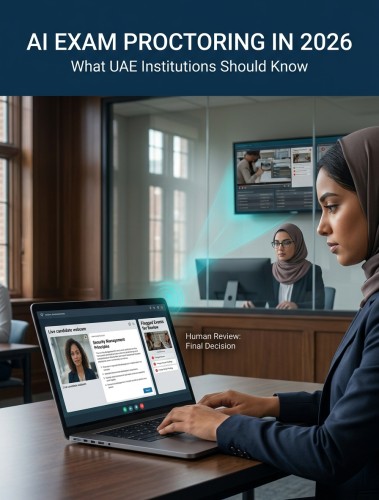
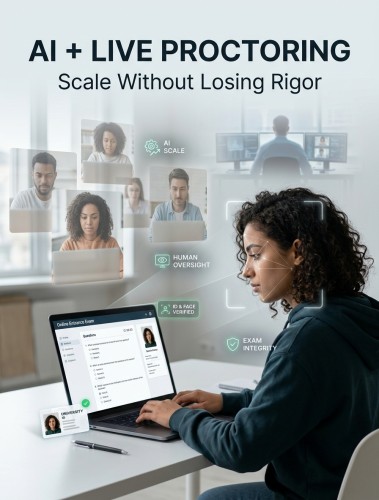
Remote proctoring plays a critical role in ensuring exam integrity. AI proctoring uses algorithms to detect suspicious behaviors, such as eye movements or unauthorized background voices, flagging anomalies for human review. Human proctoring provides a more nuanced, personal approach, with live proctors able to intervene or provide support in real-time. Many institutions opt for a hybrid model, leveraging AI for initial detection and efficiency, with human proctors overseeing live streams or reviewing flagged incidents to deliver reliable remote proctoring.
Curious how Proctor360 fits your exam program?
See AI, live, multi-cam, and 360° Total View™ proctoring in a quick 30-minute demo.
Privacy-First Design Principles
Student privacy is a significant concern regarding webcam and microphone access. Implementing privacy-first design principles means that data collection is minimized, anonymized where possible, and securely stored. Clear consent mechanisms must outline exactly what data is collected, why, and how it will be stored in compliance with regional data privacy regulations like GDPR. Transparent policies help build trust and satisfy proctoring compliance standards.
Deterring Malpractice Intelligently
Beyond live monitoring, other tools can deter cheating effectively without being invasive. Secure browser lockdown features restrict access to external applications, websites, and system resources during an exam. Incorporating intelligent question banks that randomize question order or utilize adaptive testing algorithms makes it harder for students to share answers, serving as robust exam integrity tools.
Clear Communication on Rules and Expectations
Much of student anxiety around security can be mitigated through transparent communication. Before the exam, students should receive detailed information about the proctoring process, acceptable behaviors, room setup guidelines, and what constitutes a flagged incident. Providing examples and FAQs about the proctoring system helps demystify the technology, reducing anxiety and making the environment feel fair.
Crafting an Exceptional User Experience
An online exam can feel clunky or stressful if the user experience (UX) is neglected. A smooth online exam experience extends beyond basic functionality to encompass how a student interacts with the platform. An intuitive exam UI/UX is crucial for student success and satisfaction.
Intuitive Interface Design
The design of the exam interface should be clean, uncluttered, and easy to navigate. Students should clearly see the questions, answer options, timer, and navigation controls without confusion. Consistent design elements throughout the seamless exam platform reduce cognitive load, making the entire assessment process feel effortless online.
Minimizing Cognitive Load and Stress
The presentation of exam content directly impacts student stress. Breaking longer exams into clear sections with progress indicators helps students manage their time. For timed exams, a prominent yet unobtrusive timer helps students pace themselves. Minimizing complex layouts or excessive animations ensures a user-friendly test interface that supports absolute focus.
On-Demand Support and Troubleshooting
Even with the best preparation, unexpected issues happen. Providing readily accessible, on-demand support through a live chat feature within the exam environment or a direct helpline is critical. Support staff must be well-trained to quickly diagnose common problems, turning a potential technical hiccup into a minor blip and maintaining a seamless exam platform experience.
Accessibility for All Learners
Online exam platforms must adhere to accessibility standards, such as WCAG (Web Content Accessibility Guidelines), to ensure compatibility with screen readers, keyboard navigation, and adjustable font sizes. Providing accommodations for students with disabilities, such as extended time, must be seamlessly integrated into the platform to foster an equitable testing environment.
Practice Exams and Tutorials
Offering students opportunities to take practice exams or interactive tutorials before the actual assessment significantly reduces anxiety. These practice sessions allow students to get acquainted with the platform's interface and proctoring mechanisms in a low-stakes environment, ensuring that on exam day, their focus is entirely on the exam content.
Beyond the Exam: Post-Assessment Strategies
A smooth online exam experience doesn't end when a student clicks submit. The post-assessment phase is equally important for reinforcing student satisfaction and driving continuous improvement.
Rapid Feedback and Results
For objective assessments, rapid feedback on results reduces the anxiety associated with long waiting periods. Providing detailed results and explanations turns the exam into a learning opportunity. For qualitative assessments, clear timelines for grading should be communicated to manage expectations.
Detailed Analytics for Improvement
Institutions should leverage data through a comprehensive exam analytics dashboard. Analyzing technical metrics like completion rates, time spent per question, and common points of exit reveals areas for platform improvement, allowing educators to refine future exams.
Gathering Student Feedback
Implementing an optional post-exam survey gathers invaluable qualitative feedback regarding technical issues, ease of navigation, and overall feelings about the proctoring experience. Regularly acting on student suggestions is an essential part of an iterative platform enhancement strategy.
Iterative Platform Enhancement
Online exam platforms should not remain static. Based on feedback, analytics, and emerging best practices, continuous software updates are necessary to ensure that the platform remains secure and responsive to the changing needs of students and educators over the long term.
Future-Proofing Your Online Exams
Staying abreast of technological advancements is key to future-proofing your online exams and ensuring they remain effective.
- AI and Machine Learning: Beyond basic anomaly detection, AI can power predictive analytics to identify technical risks before an exam begins, or support real-time exam monitoring and adaptive testing.
- Blockchain in Security: Recording exam results and proctoring logs on a decentralized ledger creates an unalterable, verifiable record that prevents tampering and delivers a highly secure assessment delivery system.
- Virtual Reality (VR): For practical subjects, VR offers the potential for immersive assessments where students demonstrate hands-on skills in a simulated environment, adding a new dimension to accessible digital assessments.
Conclusion: Building Your Smooth Exam Experience Roadmap
Creating a truly smooth online exam experience for students requires a holistic approach that integrates robust technical infrastructure, intelligent security measures, and thoughtful user-centric design. By focusing on these pillars, educational institutions can foster environments where students confidently demonstrate their knowledge, free from unnecessary stress. Prioritizing the student experience ultimately leads to more reliable assessments, stronger academic integrity, and greater trust in the digital learning ecosystem.
Frequently Asked Questions (FAQs)
How can institutions reduce technical issues on exam day?
Run mandatory system checks 24–48 hours before exam day, provide clear technical instructions in the enrollment confirmation email, and ensure 24/7 support is available from exam open to close. Proctor360's pre-exam check tool identifies 95%+ of issues before they become exam-day failures.
What should students do the night before a proctored exam?
Students should run the Proctor360 system check, confirm their ID is ready, test their webcam and microphone, choose a quiet, well-lit room, and charge their device fully. Proctor360's pre-exam checklist is available in the candidate help center.
What is the most common reason for exam interruptions in online proctoring?
Unstable internet connections account for the majority of exam interruptions. Proctor360 recommends wired Ethernet connections for high-stakes exams and provides a bandwidth test tool in the pre-exam system check.
How does Proctor360 support examinees who experience technical problems during an exam?
During a live-proctored exam session, examinees can chat directly with their proctor for real-time assistance. If more detailed technical support is needed, the proctor can call the examinee or meet online to help resolve the issue. For AI-only sessions or outside of exam windows, examinees can use the chatbot on our website or submit a ticket at https://support.proctor360.com/help/365012637, and our support team will email them back within 15 minutes..
Can institutions see real-time status of all students during a live exam?
Yes. Proctor360's exam administrator dashboard shows real-time session status for all active candidates, connection quality, AI flag count, proctor assignment, and time remaining, all in a single monitoring view.
Ready to see Proctor360 in action?
Get a 30-minute demo tailored to your exam type, whether that is AI, live, multi-cam, or 360° Total View™.

Kranthi Bathula is the Co-Founder and CTO of Proctor360 and an online proctoring and assessment-security expert with extensive experience in EdTech, exam integrity, and AI-enabled test monitoring. He writes about remote proctoring, test security, AI in assessments, live and automated proctoring, and best practices for secure online testing. Through his engineering-driven insights, Kranthi helps educational institutions, certification bodies, and employers make informed decisions to protect the integrity of their exams.