Key takeaways
- AI is reshaping proctoring through better behavioral analysis and identity verification, not just face detection.
- The market is moving toward AI handling scale while humans handle judgment and edge cases.
- Institutions that plan for fairness and privacy will get the upside of AI without the backlash.
How AI Is Transforming Online Proctoring: The Complete 2026 Guide
Are you concerned about the integrity of your online assessments? The shift to digital learning and remote work brings immense flexibility, but it also introduces exam security risks. Cheating incidents remain a persistent worry for educational institutions and corporations alike. Fortunately, technology is evolving rapidly. Artificial Intelligence (AI) is now a practical, robust solution transforming how we secure remote exams, offering unparalleled efficiency and fairness.
The AI Proctoring Market Landscape 2026
The demand for reliable digital exam security has skyrocketed. Experts predict the global AI online proctoring system market will reach $9.17 billion by 2033, growing at an annual rate (CAGR) of 18.7%. While North America currently leads this market, the Asia-Pacific region is expanding rapidly due to large-scale online recruitment and education initiatives. Today, over 70% of educational institutions utilize automated monitoring, highlighting its crucial role in maintaining academic integrity worldwide.
Understanding the Core of AI Online Proctoring
What makes AI online proctoring so effective? It combines several sophisticated technologies to monitor test-takers and their environments, providing consistent, unbiased oversight that human monitors alone cannot match.
Facial Recognition & Identity Verification
AI accurately identifies the test-taker and matches them against their registration records. By using advanced "liveness detection," the software prevents identity fraud and spoofing attempts via photos or videos. Studies show AI facial verification achieves up to 99% accuracy, minimizing identity fraud from the start.
Behavioral Analysis Algorithms
Advanced algorithms continuously track subtle behavioral cues. The system analyzes eye movement and gaze patterns to detect if a candidate is looking away from the screen for unauthorized answers. It also monitors unusual keyboard and mouse activities, alongside audio pattern recognition to flag background whispers or unapproved speech.
Object & Environment Monitoring
Beyond tracking the individual, the software scans the entire room. It identifies unauthorized items like secondary mobile phones, tablets, or books. It also uses computer vision to detect additional people in the testing space and restricts the browser from screen sharing or accessing unapproved web pages.
Adaptive Machine Learning
The true strength of AI lies in its ability to adapt. Machine learning systems continuously evaluate flagged behaviors across thousands of test sessions to refine anomaly detection patterns. This ongoing optimization reduces false positives by up to 28%, teaching the system to accurately differentiate between innocent movements and actual cheating.
Transformative Benefits for Assessment Companies
Integrating automated oversight into testing workflows yields major improvements in security, administrative efficiency, and overall cost reduction.
Enhanced Security & Cheating Prevention
AI platforms provide a massive 96% reduction in cheating compared to unmonitored online exams. Administrators receive real-time flags for suspicious activity, allowing for immediate intervention or swift post-exam audits. Additionally, secure, tamper-proof audit trails provide clear, objective data for academic misconduct investigations.
Scalability & Cost Efficiency
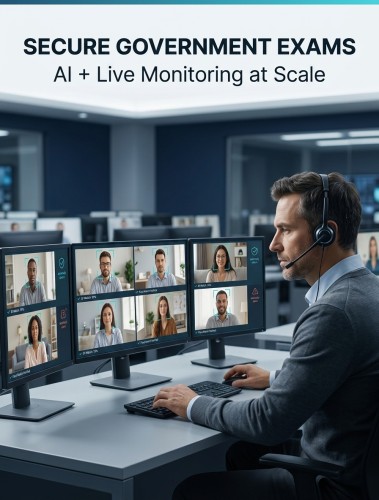
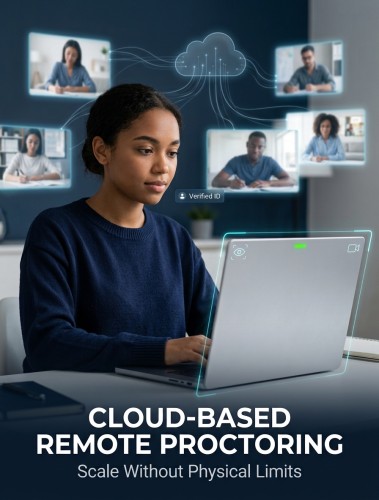
Automated systems easily scale to monitor thousands of students simultaneously, eliminating the scheduling bottlenecks of human proctors. Operating 24/7 across all time zones, this automated scalability reduces operational proctoring costs by 40-60%, maximizing institutional resources.
Improved Test-Taker Experience
Automated security allows students to preserve their personal focus in a low-stress environment without a live human watching their every move. Candidates enjoy the flexibility to take exams at their convenience, while privacy-first architectures ensure that only essential data is collected and processed transparently.
Advanced Analytics & Insights
Administrators gain access to powerful dashboards highlighting real-time session updates and retrospective metrics. Predictive analytics identify potential testing vulnerabilities, allowing organizations to consistently refine their overall exam layouts, formats, and structural integrity.
Implementation Strategies by Region
Successfully deploying automated proctoring requires aligning software protocols with local legal structures and infrastructure realities.
North America Implementation
In North America, compliance with core privacy guidelines like the Family Educational Rights and Privacy Act (FERPA) is mandatory. Systems must prioritize robust data encryption and absolute student privacy. Seamless integration with mainstream Learning Management Systems (LMS) like Canvas, Blackboard, and Moodle is essential for smooth administrative adoption.
European Market Considerations
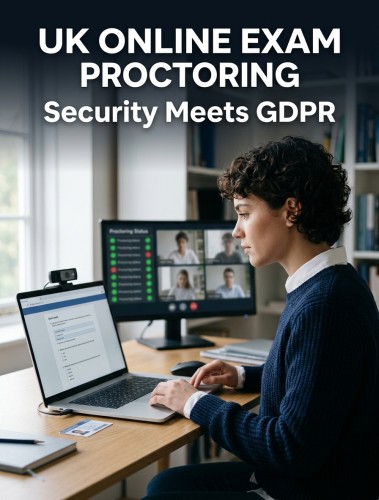
Europe requires strict compliance with the General Data Protection Regulation (GDPR), demanding localized data storage and transparent processing agreements. Platforms must incorporate ethical AI standards to completely eliminate algorithmic bias, ensuring fair treatment across diverse, multi-jurisdictional populations.
Middle East & Asian Markets
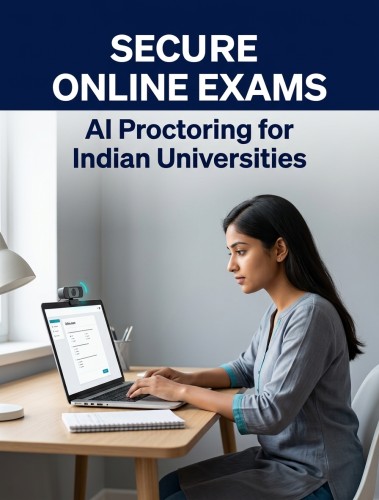
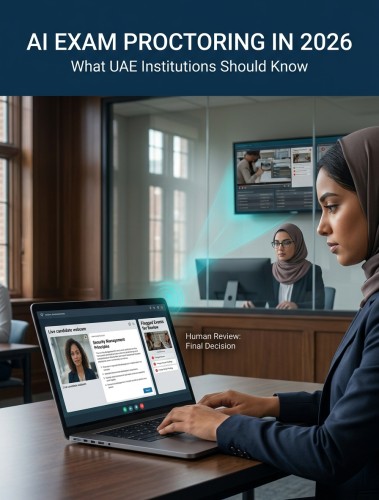
These high-growth areas feature massive assessment volumes for university entries and corporate hiring. Solutions must offer robust multi-language support and exceptional system scalability. To accommodate varying internet speeds and digital access, deployment architectures must remain highly flexible, combining cloud-based and on-premise components.
Integrating AI Proctoring with Existing Assessment Ecosystems
Curious how Proctor360 fits your exam program?
See AI, live, multi-cam, and 360° Total View™ proctoring in a quick 30-minute demo.
To maximize utility, smart proctoring tools must anchor effortlessly into an institution's existing educational and technological infrastructure.
LMS Integration Best Practices
Modern solutions bridge cleanly with top LMS platforms through single sign-on (SSO) systems. This allows candidates to launch their exams securely from a single dashboard. Automated grade book synchronization effortlessly delivers flag summaries and session data straight to instructors, preserving their operational workflow.
API & Custom Integration Options
For proprietary or niche assessment software, developer-friendly REST APIs offer deep customization options. Webhooks transmit real-time alert updates to internal tracking platforms, while flexible analytics pipelines allow organizations to extract clean data directly into their business intelligence software.
Pre-employment Assessment Integration
In corporate sectors, automated proctoring links with Applicant Tracking Systems (ATS) to streamline talent acquisition. This architecture optimizes the candidate experience, maintains fair hiring compliance, and delivers validated evaluation metrics directly to recruiters' portals.
Overcoming Implementation Challenges
Proactively addressing common logistical friction points helps build immediate institutional trust and smooths user adoption.
Managing False Positives
A primary operational concern is the occurrence of false positives, where a routine movement flags a user unfairly. Advanced pattern recognition has driven these errors down significantly over time.
To bridge this technical gap, premium providers like Proctor360 rely on a reliable hybrid model that incorporates human-in-the-loop validation. Under the Proctor360 framework, automated system alerts are initially routed to expert human proctors who verify the context before escalation. This process protects the student's record while allowing organizations to customize sensitivity settings to fit specific exam tolerances.
Ensuring Accessibility & Equity
Systems must prioritize inclusivity by offering specialized accommodations for candidates with disabilities, including compatibility with screen readers and adaptive input hardware. Clear technical benchmarks regarding internet speed and basic system requirements must be communicated early to support users in remote locations.
Staff Training & Change Management
Successful rollouts rely on comprehensive training modules for administrative personnel alongside clear onboarding guides for test-takers. Transparent communication outlining exactly how the AI works, how data is secured, and how students can appeal a flag helps clear up misconceptions and eases tech anxiety.
ROI Analysis & Cost Considerations
Transitioning to automated security provides an exceptional return on investment by eliminating high manual overhead and safeguarding organizational value.
Cost-Benefit Analysis Framework
A true fiscal assessment weighs software acquisition costs against major long-term structural returns. Direct financial relief stems from a drastic reduction in human monitor hours, enhanced automated grading pipelines, and minimized institutional spending on cheating investigations or reputational damage control.
Pricing Models Comparison
Providers offer multiple pricing variations to accommodate scaling demands. Per-assessment pricing options work perfectly for shifting seasonal workflows, while flat-rate subscriptions fit steady, high-volume testing schedules. Enterprise licensing models support large entities that require tailored software customizations.
Long-term Value Proposition
Automated monitoring builds a scalable foundation for global programmatic expansion. It preserves the long-term equity of institutional credentials, builds unwavering trust with external regulatory boards, and guarantees a strictly verified, reliable talent pipeline for employers.
Future Trends & Emerging Technologies
The remote exam space continues to advance rapidly, paving the way for next-generation security and immersion vectors.
AI Proctoring Agents (2026+)
We are entering the era of sophisticated, LLM-powered autonomous proctoring agents capable of understanding natural context. Instead of basic data flagging, these systems focus on real-time predictive interventions. They analyze complex behavioral sequences to safely resolve potential security issues during live sessions.
Blockchain & Immutable Records
Integrating blockchain networks allows for the creation of completely tamper-proof assessment logs. Cryptographically sealing proctoring alerts and final performance scores to a ledger guarantees absolute data security and simplifies global credential verification.
Virtual Reality Proctoring
As specialized immersive learning spaces grow, VR proctoring tracks spatial movements, physiological indicators, and ocular gaze within a fully simulated test environment. This isolates the candidate from real-world distractions and opens up brand-new assessment avenues.
Global Standardization
International alignment on AI oversight parameters will soon enable frictionless cross-border certification recognition. Establishing shared international regulatory guidelines simplifies global compliance and ensures equitable accessibility standards around the world.
Case Studies & Success Stories
Real-world deployments demonstrate the immense practical value of automated oversight across diverse operational environments.
University Implementation Case Study
A prominent university shifted its core curriculum online and deployed an automated security system, resulting in a swift 70% drop in verified academic dishonesty over two years. The transition lowered proctoring overhead by 35% and increased overall student satisfaction regarding exam fairness.
Pre-employment Assessment Case Study
A global enterprise integrated automated validation directly into its corporate ATS platform to screen over 50,000 international applicants annually. The software successfully eliminated candidate impersonation, elevated hiring managers' trust in candidate metrics, and reduced overall time-to-hire window lengths.
Certification Body Implementation
A major international credentialing institution expanded its reach across 150 countries by implementing smart remote oversight. This strategy boosted total examination volumes by 45% within three years while ensuring strict compliance with complex international data localization mandates.
Conclusion
The modern assessment world has been permanently redefined by automated technology. From advanced identity validation to comprehensive environmental scans, AI online proctoring delivers unparalleled scale, ironclad security, and profound cost reductions.
Adopting these systems is now a core requirement for organizations looking to secure their competitive standing. Partnering with industry leaders like Proctor360 allows institutions to optimize their strategic operational focus while anchoring their credentials in verified excellence. Embracing these advanced systems ensures a fair, trustworthy, and globally accessible educational landscape.
Frequently Asked Questions (FAQs)
1. How accurate is AI proctoring compared to human proctors?
AI systems offer superior consistency, tracking multiple data channels like gaze coordinates, audio inputs, and application state simultaneously without fatigue. Facial verification systems hit up to 99% accuracy rates, outperforming traditional human observation baselines while removing personal biases from the tracking process.
2. What about privacy concerns with AI monitoring?
Top-tier proctoring platforms utilize strict privacy-by-design architectures. They limit data collection exclusively to critical authentication details, deploy comprehensive end-to-end encryption protocols, and comply with FERPA and GDPR to protect candidate information.
3. Can AI proctoring handle different types of assessments?
Yes. Through highly adaptable parameters, platforms protect traditional timed exams, verify open-book exercises by monitoring background applications, and adapt easily to oral presentations or hands-on technical demonstrations.
4. How do we manage false positives in AI proctoring?
Advanced pattern matching has drastically reduced false alert frequencies over time. Leading deployment architectures utilize Proctor360's hybrid oversight approach, routing any flagged alerts to human review experts who verify the real-world context before logging an infraction.
5. What is the typical implementation timeline for AI proctoring?
Standard configurations utilizing out-of-the-box LMS integration modules typically deploy within a few weeks. Bespoke enterprise setups featuring deep custom API connections, custom workflows, and staff training protocols generally follow a structural timeline ranging from three to six months.
Ready to see Proctor360 in action?
Get a 30-minute demo tailored to your exam type, whether that is AI, live, multi-cam, or 360° Total View™.

Kranthi Bathula is the Co-Founder and CTO of Proctor360 and an online proctoring and assessment-security expert with extensive experience in EdTech, exam integrity, and AI-enabled test monitoring. He writes about remote proctoring, test security, AI in assessments, live and automated proctoring, and best practices for secure online testing. Through his engineering-driven insights, Kranthi helps educational institutions, certification bodies, and employers make informed decisions to protect the integrity of their exams.